











ENCYCLOPEDIA
Your guide to warehouse automation knowledge, technologies, and industry insights.
What are the main design principles for a ZS ROBOTICS four-way shuttle pallet AS/RS system?
The main design principles focus on balancing robot utilization, reducing unnecessary movements, and improving system efficiency.
Key principles include:
1. Balanced Robot Distribution
The number of shuttle robots should be reasonably distributed across different storage levels.
2. Minimize Level Changes
Robot operations should avoid unnecessary movement between different rack levels.
3. Reduce Zone Crossing
Task allocation should minimize unnecessary movement between different warehouse zones.
4. Optimize Direction Switching
Robot routes should minimize unnecessary direction changes.
5. Main Aisle Planning
Main aisles should preferably use bidirectional flow designs instead of circular routes.
6. Task Balancing
Storage and retrieval tasks should be balanced across:
Zones
Levels
Aisles
In high-demand areas, double aisles can be designed to improve throughput.
Robot travel paths are typically optimized using Z-shaped and C-shaped routing strategies.
How is storage depth designed for a ZS ROBOTICS four-way shuttle warehouse system?
Storage depth design should consider SKU quantity, storage demand, and warehouse operating strategy.
For a dense storage system:
U represents the number of stored SKUs.
S represents the required storage locations.
n represents the number of rack levels.
The recommended average storage depth per level can be calculated as:
S / U / n × 2
The storage strategy adopts a multi-level balanced configuration, allowing multiple shuttle robots on different levels to retrieve the same SKU simultaneously.
This improves outbound efficiency and provides flexible storage planning.
For storage positions with aisles on both sides, storage depth can be adjusted according to actual operational requirements.
What data should be collected during the initial warehouse survey for a four-way shuttle AS/RS project?
Before designing a ZS ROBOTICS four-way shuttle warehouse automation solution, the following information should be evaluated:
1. Pallet Dimensions and Operating Environment
Pallet specifications and temperature conditions determine the appropriate shuttle robot model and system configuration.
2. Product Height
The height of goods including pallets determines:
Rack levels
Storage density
Overall warehouse layout
3. SKU Quantity
The number of SKUs affects:
Main aisle planning
Storage depth design
System configuration
4. Inbound and Outbound Throughput Requirements
Required warehouse throughput determines:
Number of shuttle robots
Lift quantity
Conveyor configuration
5. Material Flow and Operation Strategy
Material handling processes and warehouse strategies influence:
Equipment selection
System layout
Control logic
6. Order Patterns and Wave Planning
Order waves and picking patterns help determine:
Robot zoning
Operation modes
Scheduling strategies
7. Replenishment and Relocation Frequency
The frequency of relocation operations affects:
Storage depth configuration
Rack design
A detailed warehouse analysis ensures the system achieves the required balance between storage density, throughput, and operational efficiency.
What key technical requirements should be considered when selecting a ZS ROBOTICS four-way shuttle system?
For a high-performance four-way shuttle pallet AS/RS project, important technical considerations include:
1. Mechanical Drive Structure
The four-way shuttle robot should adopt a pure mechanical transmission structure without internal liquid lubricants, providing:
Easier maintenance
Reduced contamination risk
Higher operational reliability
2. Multi-Wheel Driving System
The shuttle robot is equipped with:
Four drive wheels for both main and sub aisles
Optional additional auxiliary wheels in main aisles
The multi-wheel configuration improves:
Running stability
Load-bearing capability
Gap-crossing performance
3. Compact Robot Structure
With a robot body thickness of approximately 150 mm, the system can use commonly available shuttle rack rails, helping reduce rack customization requirements and project costs.
4. Absolute Positioning Technology
The shuttle robot should use QR-code-based absolute positioning technology to provide real-time position feedback and accurate navigation.
What safety designs are integrated into the ZS ROBOTICS four-way shuttle robot?
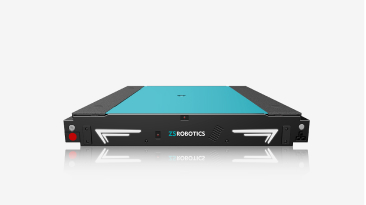
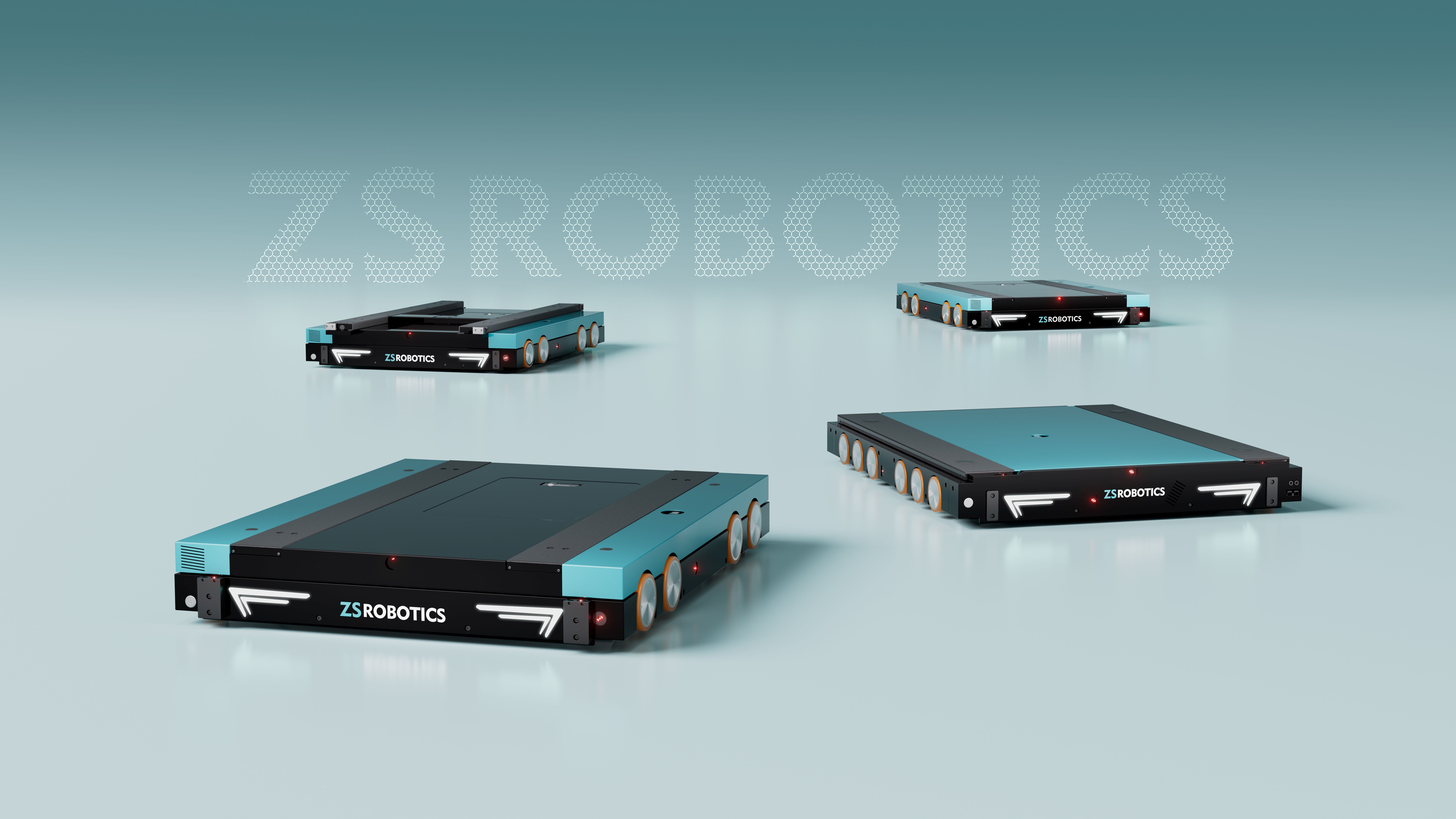
The ZS ROBOTICS four-way shuttle robot incorporates multiple safety features to ensure reliable operation in automated warehouse environments.
Key safety designs include:
1. Anti-Collision Protection
Protective bumpers are installed around the shuttle robot to reduce impact damage and protect both the external structure and internal components.
2. Optional Obstacle Detection System
The robot can be equipped with an obstacle detection system to improve operational safety by identifying potential obstacles during movement.
3. Intelligent Multi-Robot Traffic Management
When multiple shuttle robots operate simultaneously, the WCS automatically plans travel paths for each robot to prevent interference and ensure efficient task execution.
4. Battery Safety Management
The battery system includes power monitoring functions and supports automatic charging management, improving operational safety and energy reliability.
What are the main wear parts of the ZS ROBOTICS four-way shuttle robot?
The main consumable component of the ZS ROBOTICS four-way shuttle robot is the driving wheel.
The service life of the driving wheel depends on factors such as:
Rack rail installation accuracy
Operating frequency
Actual wear condition of the polyurethane coating
Under normal operating conditions, the driving wheels may require replacement after approximately one year of operation.
However, replacement decisions should be based on the actual wear condition of the polyurethane wheel surface rather than a fixed replacement cycle.
What pallet requirements should be considered for a ZS ROBOTICS four-way shuttle warehouse system?
To ensure safe and stable operation, pallets used in the four-way shuttle rack system should meet the following requirements:
1. Pallet Deformation
Pallets with visible deformation should not be used for storage, regardless of whether they are made of wood, plastic, or steel.
2. Damaged Pallets
Pallets with broken or missing components, such as damaged wooden boards or plastic parts, must not be used.
3. Pallet Support Structure
For wooden pallets, if the middle support block on the loading side is significantly recessed compared with the pallet edge:
A recess greater than 10 mm is not recommended for use.
If the support block is detached, the pallet must not be used.
4. Barcode Condition
Pallet barcodes must be replaced if they are:
Detached
Damaged
Dirty or unreadable
5. Pallet Deflection
When fully loaded, if the pallet center deflection exceeds 12 mm, the pallet must be removed from service.
Proper pallet management is essential for reliable operation of automated pallet storage and retrieval systems (AS/RS).
How does the four-way shuttle robot detect whether a pallet has been successfully picked up?
The ZS ROBOTICS four-way shuttle robot uses an upward-facing ultrasonic sensor to detect pallet presence.
The sensor specifications include:
Detection direction: Vertical upward sensing
Detection range: 25–250 mm
By monitoring the space above the robot, the ultrasonic sensor identifies whether a pallet and goods are correctly positioned on the shuttle robot, ensuring reliable pallet detection during storage and retrieval operations.
Does the ZS ROBOTICS four-way shuttle robot support obstacle detection?
Yes. The ZS ROBOTICS four-way shuttle robot can be equipped with an optional obstacle detection system.
The system uses four laser radar sensors, with one sensor installed on each side of the robot.
Technical specifications:
Detection distance: 0.1 m–2 m
Sensor quantity: 4 laser radar units
When an obstacle is detected in the traveling direction, the shuttle robot automatically stops and sends an alarm signal to the upper-level system through WMS/WCS integration.
This optional safety function improves operational safety in automated warehouse environments.
How does the ZS ROBOTICS four-way shuttle robot clean dust from positioning QR codes?
The ZS ROBOTICS four-way shuttle robot is equipped with an automatic QR-code cleaning function to maintain positioning accuracy.
During operation:
A blower installed near the QR-code scanner operates continuously after the shuttle robot starts.
Airflow removes dust and particles from the QR-code surface while the robot is running.
In environments with excessive dust, users can additionally install soft brushes for enhanced cleaning.
This design helps ensure stable QR-code recognition and reliable positioning performance in warehouse environments.
How does the ZS ROBOTICS four-way shuttle robot perform pallet storage and retrieval?
The ZS ROBOTICS four-way shuttle robot completes pallet storage and retrieval operations through a lifting pallet platform.
Pallet Retrieval Process
When retrieving goods:
The four-way shuttle robot travels to the target storage location.
The robot moves underneath the target pallet.
The lifting platform raises the pallet together with the stored goods.
The shuttle robot transports the pallet to the designated location.
Pallet Storage Process
When storing goods:
The four-way shuttle robot carries the pallet to the assigned storage location.
The lifting platform lowers the pallet onto the rack position.
The robot completes the storage operation and returns for the next task.
The lifting operation is controlled by the servo system, while position sensors verify whether the lifting action has been completed accurately.
This design enables reliable and efficient pallet handling in high-density automated storage systems.
What is the inbound and outbound workflow of a pallet AS/RS system using four-way shuttle robots?
Pallet Inbound Process
During pallet inbound operations:
Manual forklifts or AGVs transport palletized goods to the inbound station.
The WMS (Warehouse Management System) assigns storage locations.
The WCS (Warehouse Control System) dispatches the four-way shuttle robot to pick up pallets.
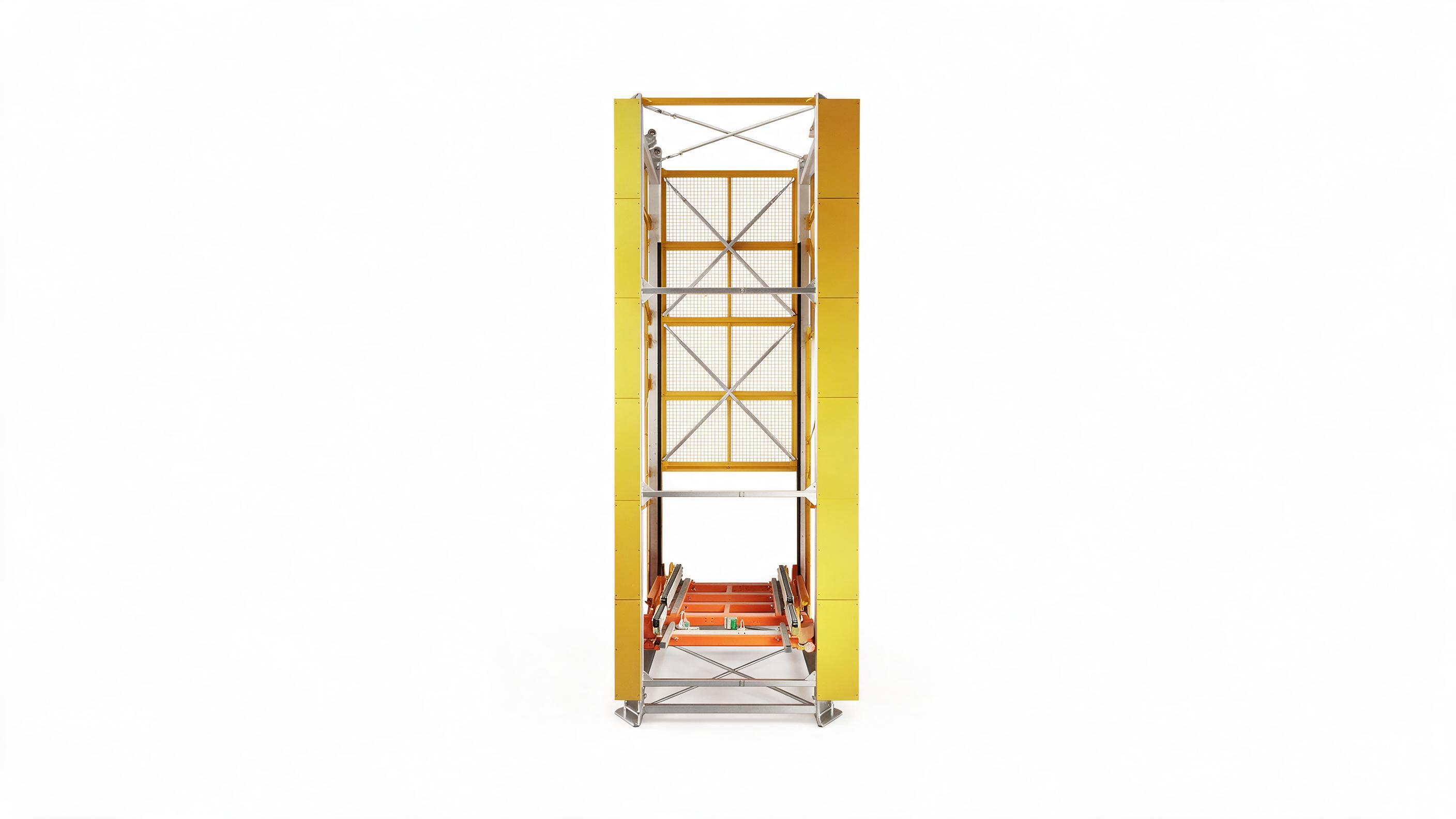
After pallet identification and verification through the conveyor system, the pallet is transferred by the ZS ROBOTICS lift to the designated rack level.
The four-way shuttle robot stores the pallet at the assigned storage location.
Pallet Outbound Process
During outbound operations:
The WMS sends an outbound task.
The WCS schedules the four-way shuttle robot to retrieve the target pallet.
The shuttle robot transports the pallet to the lift.
The lift lowers the pallet to the ground level.
The conveyor system transfers the pallet to the outbound station.
Forklifts or AGVs collect the dispatched goods.
This integrated workflow enables efficient automated pallet storage and retrieval with seamless WMS/WCS coordination.
How does the ZS ROBOTICS four-way shuttle robot communicate with the warehouse control system?
The ZS ROBOTICS four-way shuttle robot mainly uses wireless communication through industrial access points (APs) for real-time data exchange with warehouse control systems.
For customized applications, the system can also support 5G communication technology to meet advanced requirements for connectivity, responsiveness, and large-scale warehouse automation.
What are the advantages of the mechanical lifting and direction-switching design of the four-way shuttle robot?
The ZS ROBOTICS four-way shuttle robot adopts a patented mechanical lifting mechanism for direction switching, improving transmission efficiency and overall operational reliability.
Compared with traditional hydraulic lifting structures, the mechanical design provides several advantages:
Higher transmission efficiency and smoother driving performance
Reduced braking impact, minimizing slipping risks during operation
Compact structural design, reducing robot size and self-weight
Higher mechanical strength and flexibility
Improved storage density by reducing equipment footprint
Unlike hydraulic systems, the mechanical lifting structure eliminates common issues such as:
Hydraulic oil leakage and contamination risks
Short hydraulic oil replacement cycles
Seal aging problems
Complex hydraulic maintenance and troubleshooting
This design enables a cleaner, more reliable, and lower-maintenance solution for high-density pallet AS/RS applications.
What is the operating temperature range of the ZS ROBOTICS four-way shuttle robot?
The ZS ROBOTICS four-way shuttle robot is designed to operate reliably in a wide range of warehouse environments, with a standard operating temperature range of -25°C to +50°C.
The system has been successfully deployed and validated in various temperature-controlled environments, including cold storage warehouses and high-temperature warehouses, providing stable performance under challenging operating conditions.
What functions does the remote controller of the ZS ROBOTICS four-way shuttle robot provide?
The remote controller of the ZS ROBOTICS four-way shuttle robot provides essential operation and maintenance functions, including emergency stop, system reset, and power restart.
1) Emergency Stop
The emergency stop button immediately stops the four-way shuttle robot. Once activated, the PLC sends a command through the servo drive system to stop the motors, ensuring the robot stops safely and quickly.
2) System Reset
The reset button allows operators to restart the four-way shuttle robot control system by resetting the PLC program when required.
3) Power Restart
The restart function controls the main power supply of the shuttle robot. By pressing the button twice, operators can restart the robot’s main power system and restore normal operation.
